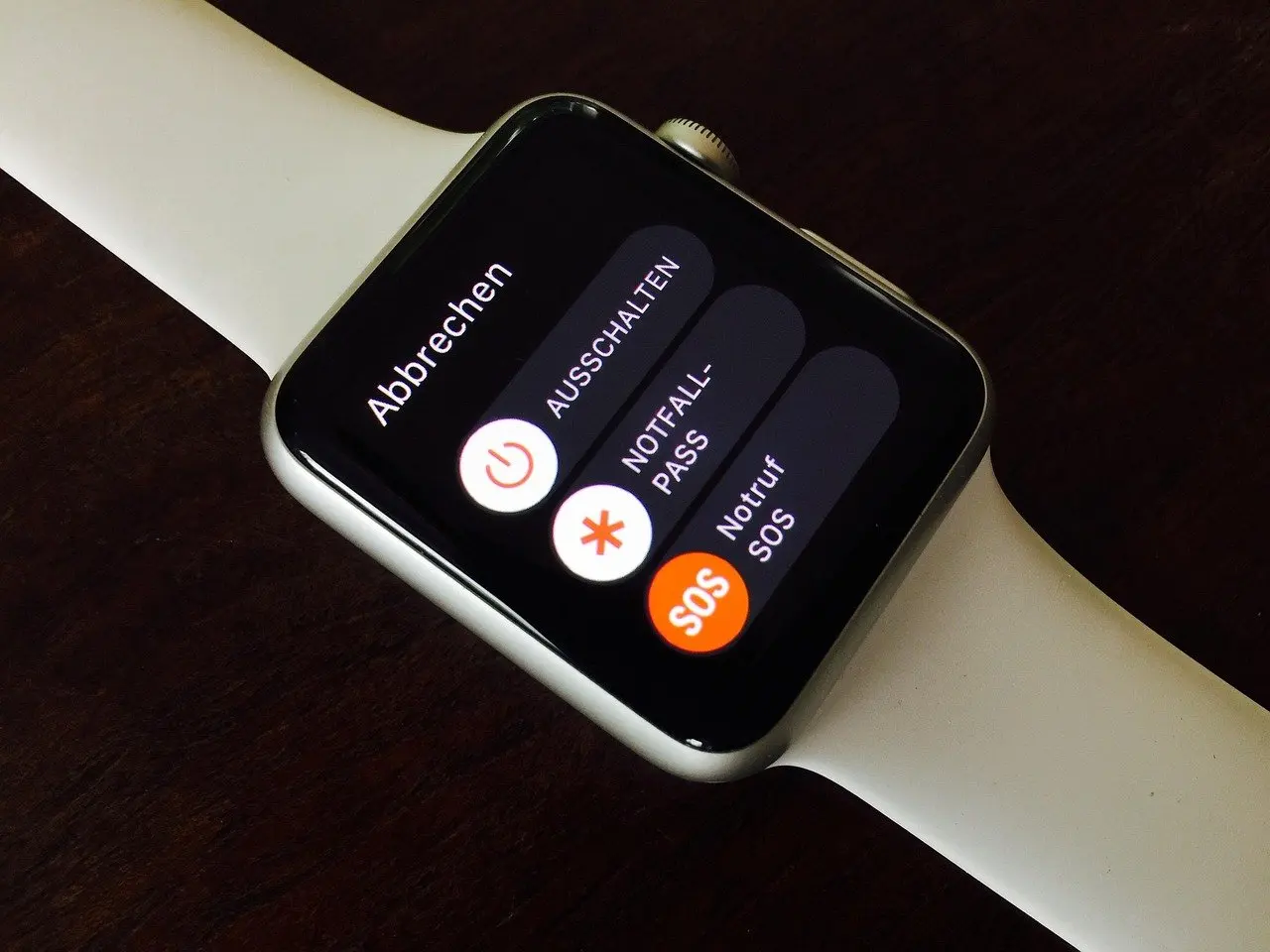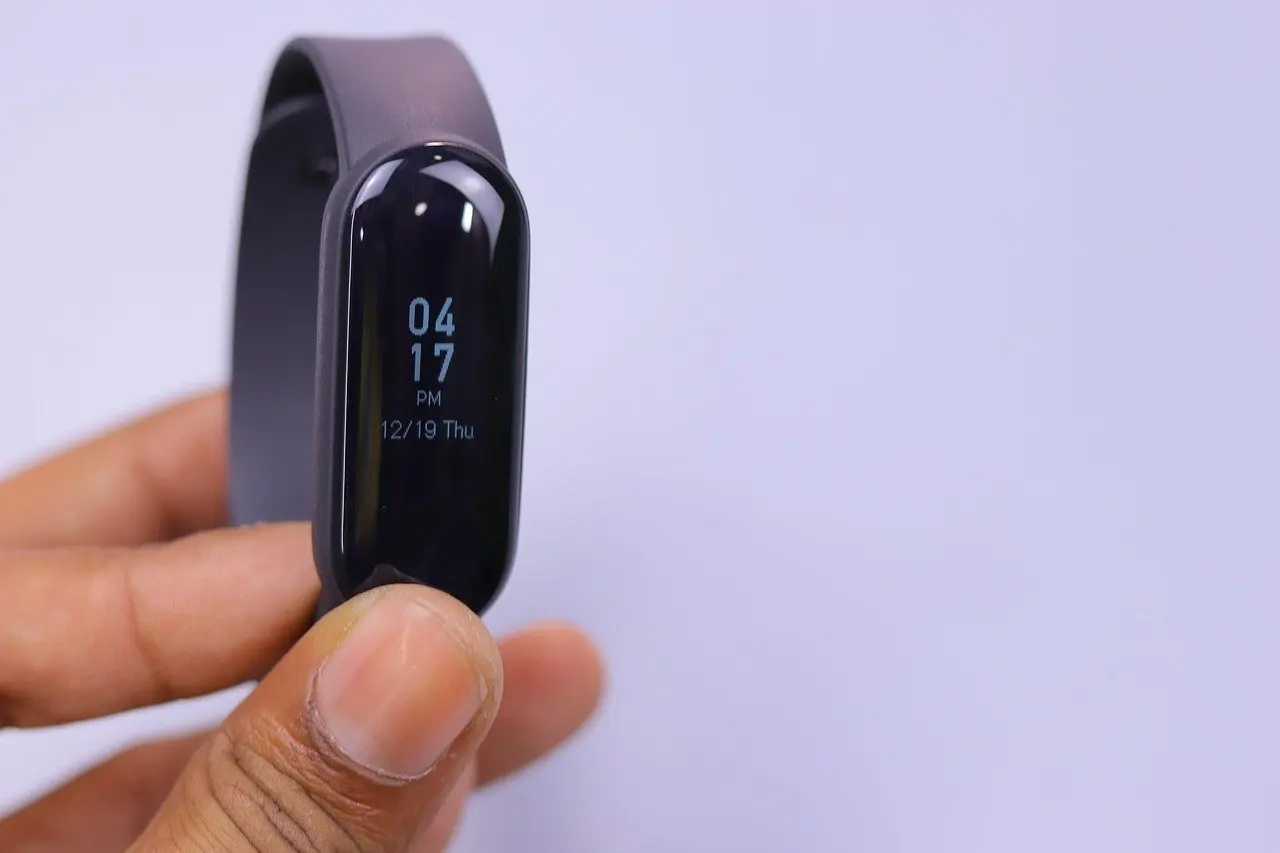
Smartwatch vs fitness band comes down to a trade-off: a band suits steps, sleep and long battery life, while a smartwatch adds a touch screen, calls and notifications but needs charging far more often.
Picture someone whose basic tracker counts steps and sleep well and who wonders whether a watch is worth the money. The criteria below answer that before the comparison table does, and the wider buying picture is covered in how to choose a smartwatch.
Decision criteria to work through first
Five checks separate a sensible upgrade from an unnecessary one. Work through them in order, because the first two settle most cases.
- List what you actually track. Steps, heart rate and sleep are band territory. AEMAI’s buying guide says a band covers 90% of the essentials at a fraction of the price. If your list stops there, a watch adds cost without adding use.
- Decide how often you will tolerate charging. This is the largest practical difference, and the battery section below turns it into numbers.
- Decide whether you want to act on the wrist. Replying to notifications, taking calls and running apps need a larger touch screen.
- Check sensors and water rating on the spec sheet. Both device types use similar optical sensing, but extras such as recovery metrics and GPS vary by model rather than by device type.
- Match the phone you own. Compatibility can rule a watch out before features matter.
Band and smartwatch side by side
The table compares the two device types on the criteria most buyers weigh. It treats the band as a basic tracker with a small screen and the smartwatch as a full touch-display device.
| Criterion | Fitness band | Smartwatch | Planning use |
|---|---|---|---|
| Screen | Small basic screen | Full HD or AMOLED touch display | A band is fine if glanceable stats are enough; a watch is needed for anything interactive. |
| Battery life | 7-14 days (typical use) | 1-2 days (heavy use) | Pick a band if charging weekly is the limit of your patience. |
| Core tracking | Steps, heart rate and sleep | Everything a band does | Core tracking alone is not a reason to buy a watch. |
| Added features | Focused on tracking | Bluetooth calling and message notifications | These extras are what you pay for when moving up. |
Figures come from AEMAI’s buying guide and a Taobao shopping guide.
Screens, calls and pairing
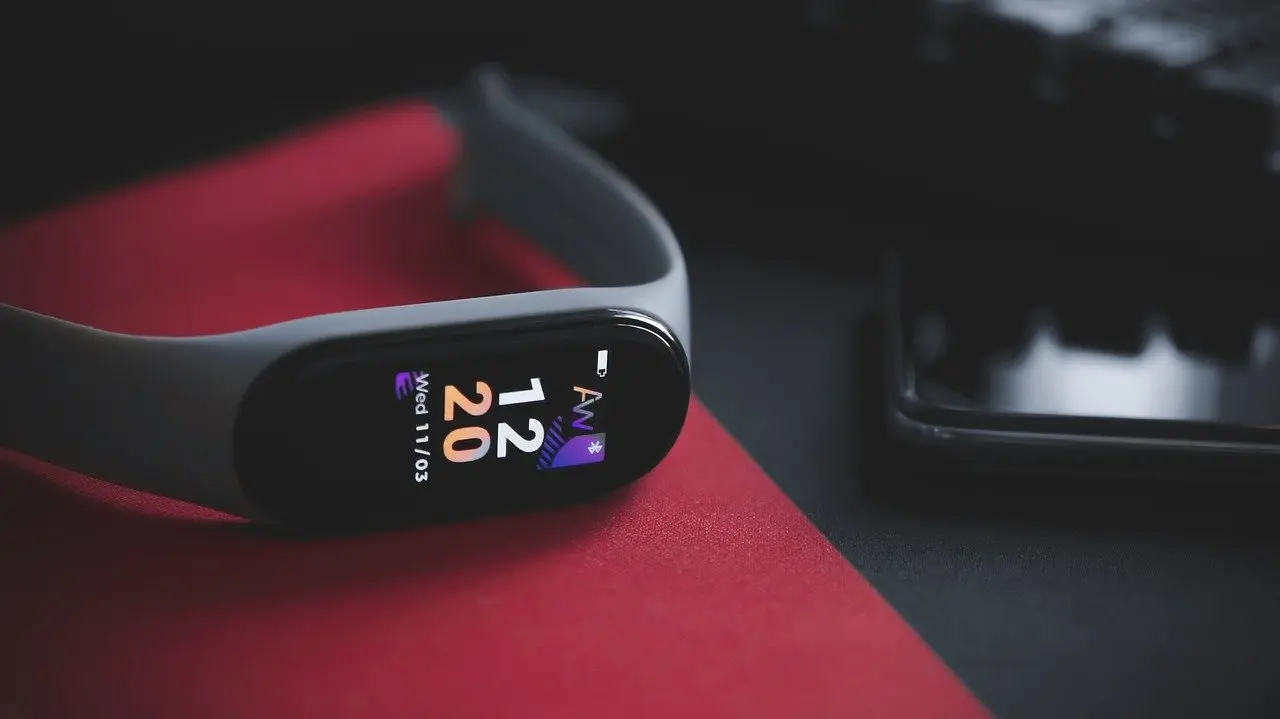
A band screen is built for a glance at steps, time or heart rate. The practical difference shows up in what you can do after the glance, since a band offers little beyond viewing its own data.
Smartwatch screens are a different class. In AEMAI’s own watch range, the G10MAX has a 1.96 in HD LCD at 320×385 resolution, while the YX4 and AS10 Ultra use 1.43 in AMOLED panels at 466×466. Those sizes show that a watch screen can be physically smaller yet sharper, so AMOLED matters more than diagonal size when reading text.
Calls come with a condition. AEMAI states the smartphone must be within about 10 m (unobstructed) for calls and messages to sync reliably, so a watch extends the phone rather than replacing it. New owners can follow the steps in how to pair smartwatch with phone before judging how well notifications behave.
Battery life and charging
Bands win on battery. The Taobao guide puts a lightweight band at 7-14 days in typical use and a full-featured smartwatch at 1-2 days under heavy use, and adds that week-long battery life suits uninterrupted sleep tracking. Geeks2u agrees that most smartwatch models only offer 1-2 days, and AEMAI summarises it as bands lasting up to a week or more against several days for watches.
The gap narrows with lightly used models. AEMAI lists typical-use battery life of up to 10 days for the G10MAX, up to 7 days for the YX4 and up to 12 days for the AS10 Ultra. These are vendor-stated typical-use figures, so treat them as a best case. Heavy use of calls, apps and GPS is what pulls watches towards the 1-2 day range.

Display settings matter as much as device type. AEMAI says an Always-On Display reduces battery life by about 30% on AMOLED models. Anyone who wants a watch and a longer interval between charges can switch that feature off before choosing a lower-capability device.
Sensors, heart rate and water resistance
Heart rate monitoring is not what separates the two. The Taobao guide notes that both device types use optical heart rate sensors and that fit is crucial, so a snug band can read better than a loose, expensive watch. AEMAI reports its devices show a variance of +/-2 BPM against a chest-strap ECG during steady-state cardio. That is a vendor test of one activity type, so it is not a promise for interval training.
Extras differ by model, not by label. Within AEMAI’s range, only the YX4 and AS10 Ultra include advanced recovery metrics such as HRV trends and respiratory rate estimation. When comparing any two devices, read the sensor list on each spec sheet instead of assuming a watch has more.
Water resistance ratings describe test conditions, not general toughness. AEMAI lists IP68 as dust-tight and submersible up to 1.5 m for 30 min, and 5ATM as rated for static water pressure equivalent to 50 m. Match the rating to your use: a rain-and-handwashing user needs less than someone swimming daily.
Who should choose which
Stay with your band
A band owner who tracks steps, heart rate and sleep does not need a smartwatch. The band already covers the core tracking, and a watch would trade a week-long charging cycle for a daily one. The one caution is the cheapest tier: geeks2u describes basic bands as predominantly digital step counters with limited feature sets, so confirm yours records heart rate and sleep before relying on it.
Move to a smartwatch
Upgrade when you will use what only a watch offers. AEMAI says smartwatches take everything a band does and add a full touch display, Bluetooth calling and message notifications. If you find yourself pulling out your phone for those tasks every day, the shorter battery life is a fair price. If you will not use them, the extra cost and charging are wasted.
Step and sleep tracking only
Choose a band. Geeks2u describes bands as smaller, more subtle and typically offering decent battery life, which suits wearing one overnight. Sleep tracking only works if the device is on your wrist at night, so a long battery interval fits the task better than a bigger screen.
Frequently asked questions
| Question | Answer |
|---|---|
| Will a smartwatch work with my phone? | Most wearables have apps for both Android and iOS, but not all, so check compatibility first, according to Geeks2u. The same source says the Apple Watch only works with iPhones. iPhone owners who want a different brand can compare options in best smartwatch for iphone not apple watch. |
| Do fitness bands have built-in GPS and NFC payments? | Do not assume so. Basic bands are predominantly step counters with limited feature sets, while GPS appears further up the range: AEMAI lists dual-band GPS on its AS10 Ultra watch, and a Taobao guide says sport-focused watches may use multi-frequency GPS. Check the spec sheet for both GPS and NFC before buying. |
| Is IP67 enough for swimming? | No. AEMAI describes IP67 as dust-tight with brief immersion up to 1 m and notes it is not rated for swimming. For regular water use, look at a higher rating on the spec sheet. |
| Will my health history move if I switch brands? | Often not cleanly. The Taobao guide says most platforms do not offer a clean export-import function for proprietary health algorithms, so historical data can stay behind in the old app. |