| Situation | Suited setup | Key figures | Planning use |
|---|---|---|---|
| Desk, shelf or video call | Desktop mini-tripod | Under 8 inches tall | Steady on a flat surface, but too short for standing-height framing |
| Backpack or travel | Compact folding tripod | Folded length under 14 inches | Check folded length first, then extended height |
| Standing or seated filming | Aluminum ball-head tripod | 50–65 inch extended height | Covers most seated-to-standing framing |
| Thick case or large phone | Wide-opening clamp | 30 mm or more jaw opening; 32 mm minimum | Measure the cased phone against the clamp opening |
| Heavier kit beyond a bare phone | Higher-rated tripod | Rated at least twice the kit weight | Treat the rating as a ceiling, not a target |
| Solo moving shots | Gimbal | Not required for fixed shots | Worth it only for regular solo filming |
Figures come from an Alibaba phone tripod buying guide and a Kentfaith tripod guide.
The best phone tripod for most people is a 50–65 inch aluminum model with a ball head, according to the Alibaba guide, provided its clamp opens wide enough for your cased phone.
Tripods are one part of a kit, and the best phone accessories roundup covers the other pieces worth pairing with them. The sections below group the choices by situation, then explain clamp width and load limits.
Desks, shelves and small spaces
A phone on a desk or shelf needs stability more than height, so the smallest stands usually do the job. Choose by where the phone will sit, not by the longest extension on the box.
Desktop mini-tripods
Desktop mini-tripods are under 8 inches tall and are often weighted or adhesive-based, as the Alibaba guide describes them. They suit video calls, recipe videos and product shots on a table, where the phone sits at a fixed, low angle.
The limit is obvious: a mini-tripod cannot lift the phone to eye level for standing shots. If a mini-tripod will be the only support you own, pick it for table use and accept that full-height framing needs a different tool.
Magnetic stands and selfie sticks
A foldable selfie stick that doubles as a stand is the lightest option. Kentfaith lists a magnetic phone stand that weighs 59 g and is 7 mm thick, which shows how little such a stand adds to a pocket or bag.
- Best for: casual group photos, quick selfies and propping a phone for a short clip.
- Not for: long takes in wind or any setup where the phone needs to pan or tilt smoothly.
Travel and outdoor shooting
A full-height tripod gives the most framing options, but folded size and leg length decide whether it gets used. Phone tripods typically extend between 15 and 72 inches, according to the Alibaba guide.
Full-height tripods
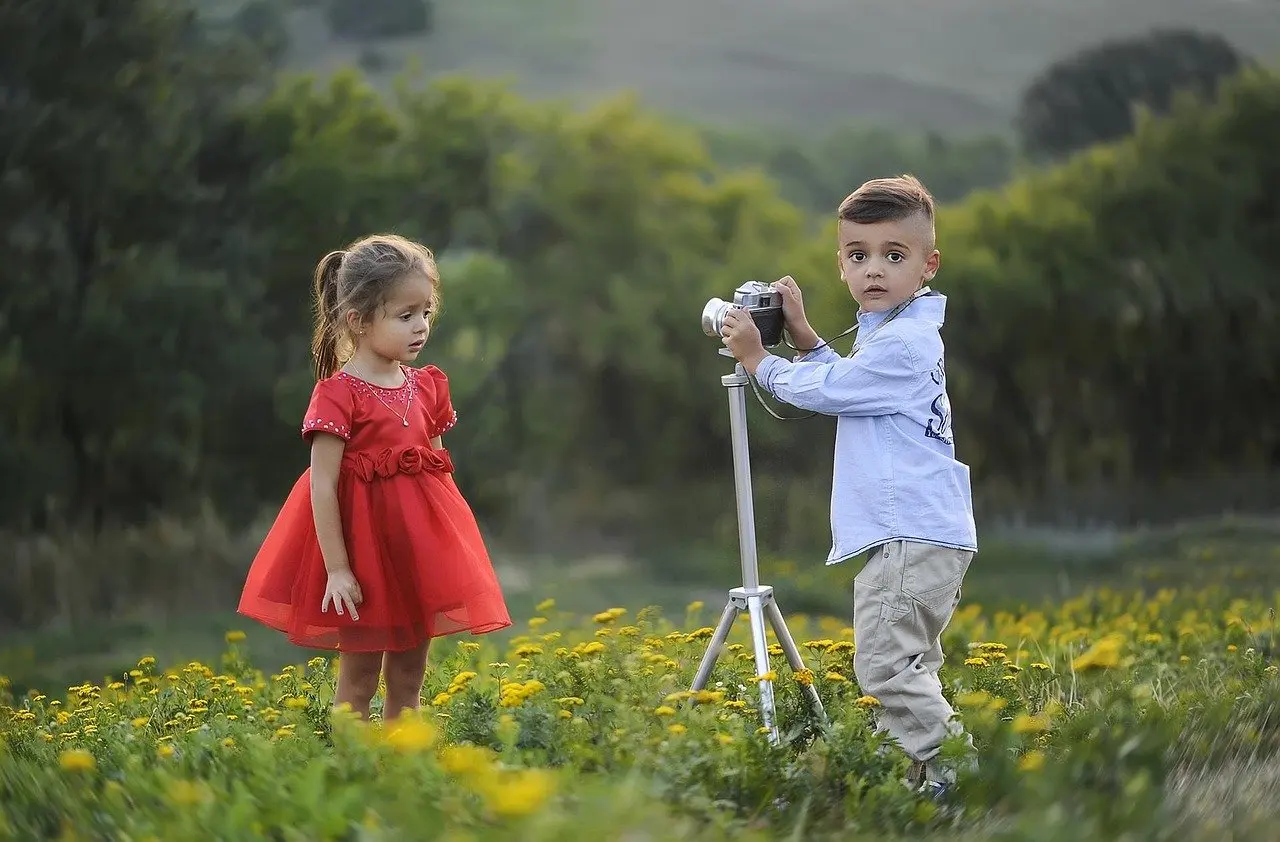
The same guide says a 65-inch extended height covers most seated-to-standing framing needs, and it suggests a 50–65 inch aluminum model with a ball-head mount as the starting point for typical users. Aluminum keeps cost down, and a ball head lets the phone tilt, pan and rotate freely, whereas fixed mounts only tilt vertically.
More height is not automatically better. A photography forum discussion notes that in most situations tripod vibrations are proportional to leg length. For a phone shot at chest height, leaving the legs and centre column short is the steadier choice.
Packable folded size
For hikes, city trips and commutes, check the folded length before the maximum height. A folded length under 14 inches fits in backpacks, according to the Alibaba guide.
Leg locks affect daily use too. Flip-lock joints adjust faster than twist locks but are less precise, so flip locks suit quick set-ups and twist locks suit careful framing.
If the shoot involves rain, spray or sand, protect the phone separately. The best waterproof phone pouch guide covers that side, and a tripod does nothing to shield the phone itself. For holding a phone in a vehicle, the best car phone mount guide is the better match than any tripod.
Clamp width and phone fit
A clamp that is too narrow is the most common reason a tripod cannot be used with a given phone. Measure the phone in its case, not bare, because a case adds thickness across the clamp opening.
Clamp opening
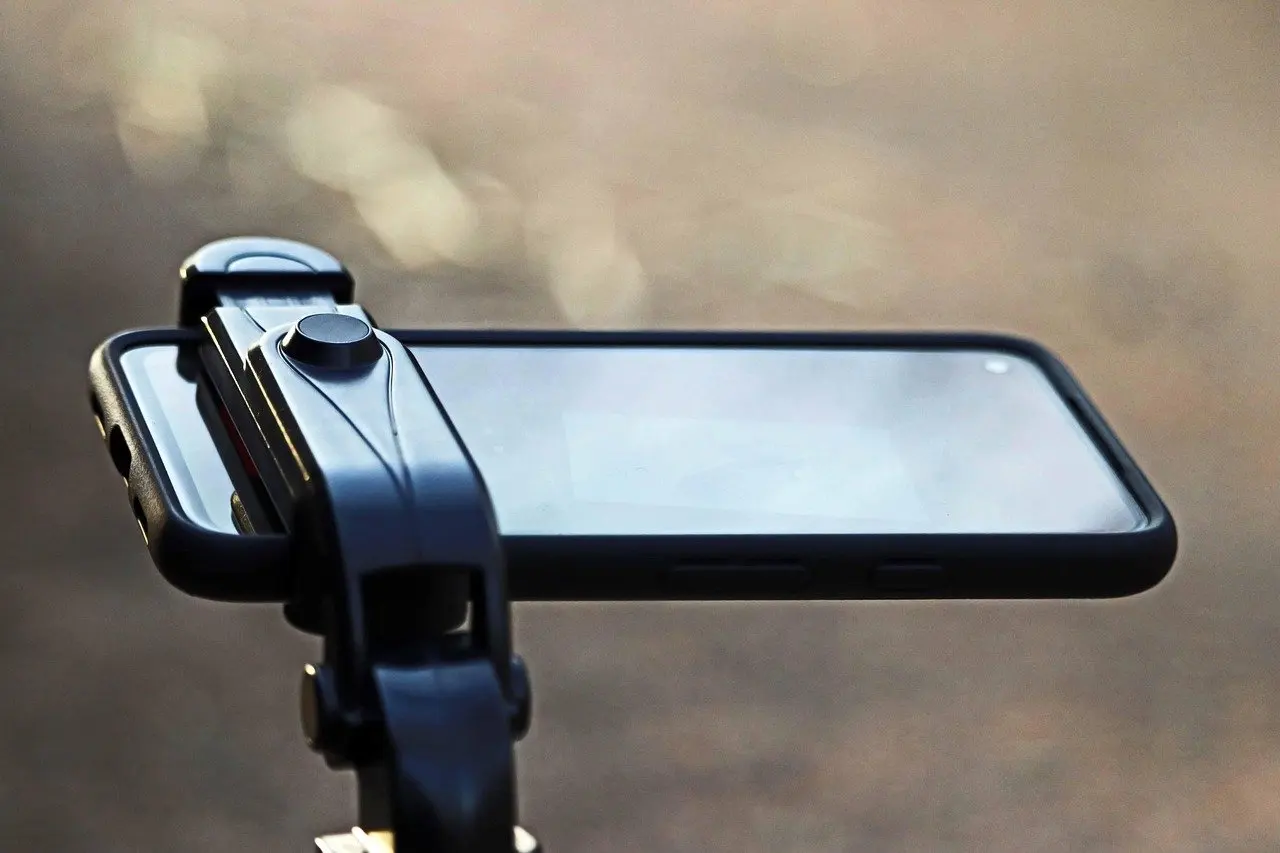
The Alibaba guide says a clamp with silicone grips and a jaw opening of at least 30 mm handles an iPhone 15 Pro Max and bulky cases. It also advises looking for product images that show the clamp fully open, with a minimum of 32 mm.
- Large or cased phones: aim at or above the 32 mm minimum rather than the 30 mm floor, so a thick case does not force the clamp.
- Slim phones: nearly any phone clamp will hold them, so grip quality matters more than extra width.
- Foldables and unusual shapes: compare the cased phone with the stated opening before ordering.
Grip matters as much as width. The same guide reports that a clamp holding a phone firmly with a thick case was the top-rated trait, mentioned in 73% of 4+ star reviews. It also says spring-loaded clamps wear out faster than screw-tightened ones, which favours screw-tightened designs for tripods used often.
Mounting thread and head
The clamp attaches to the tripod head through a mounting thread, so confirm that the clamp, the head and any adapter use matching threads. A ball head is the practical choice because it allows free tilt, pan and rotation, which matters when switching between portrait and landscape framing.
Load capacity and stability
A phone is light, so the rating on a tripod listing is rarely the limiting factor.
Reading load ratings
Load ratings matter once a light, microphone or larger camera joins the phone. Kentfaith advises choosing a tripod rated for at least twice the weight of everything it carries: if all equipment weighs 2 kg, choose a tripod of 4 kg or more, according to its tripod guide.
Listed examples show the range. A 66-inch aluminum camera tripod lists an 8 kg (17.6 lb) load capacity, and a 70-inch carbon fiber travel tripod lists 33 lb. These are camera tripods, so a phone rig sits well inside them. Treat each number as a ceiling, not something to approach.
Balance on the head
Weight placement counts as well as total weight. A front-heavy load will likely slip over time even with a very strong head, according to the forum discussion. When adding a light or microphone to a phone clamp, keep the extra weight close to the centre line and re-tighten the head before long takes.

Gimbals and remote shutters
Gimbals and Bluetooth remotes add features to a tripod, but each suits a narrower group of users.
When a gimbal beats a tripod
A gimbal is a handheld stabilizer for moving shots, while a tripod holds a fixed frame. The Alibaba guide says no magnetic ring or motorized features are required unless you regularly shoot solo content. That points to a clear rule: choose a tripod for fixed framing, and consider a gimbal only if walking or moving shots are a regular habit.
A gimbal also replaces none of the tripod’s jobs, such as holding a phone for a long recording or a group photo. Buyers who want both should settle the tripod first and add a gimbal later if solo, moving footage becomes routine.
Bluetooth remote shutter
A Bluetooth remote shutter lets the phone fire without a touch, which avoids shake and helps group shots. The guide lists the drawbacks: remotes occasionally disconnect or drain the phone battery faster, and built-in batteries degrade over 18–24 months.
A remote that is optional or separable is a safer choice than one fixed into the tripod, since a worn-out remote then does not retire the whole tripod. Test pairing before an important shoot.
Budget and premium tiers
Price tracks build quality more than features. The Alibaba guide places budget phone tripods at $9–$22 USD and premium ones at $43–$115 USD.
- Budget tier: suits occasional use, such as table-top video calls or the odd group photo. Check the clamp opening and expect more wear in spring-loaded clamps.
- Premium tier: suits regular filming, heavier add-ons or frequent travel, where sturdier legs and a reliable head pay back over time.
Frequently asked questions
| Question | Answer |
|---|---|
| What is the best tripod for a phone? | A 50–65 inch aluminum ball-head model is the suggested starting point for typical users, per the Alibaba guide. Choose a desktop mini-tripod instead if the phone will stay on a table. |
| Will my phone fit the tripod clamp? | Compare the cased phone with the clamp’s fully open width. A jaw opening of at least 30 mm handles an iPhone 15 Pro Max with a bulky case, and 32 mm is the suggested minimum. |
| Is a gimbal worth it over a tripod? | Only for regular solo, moving shots. For fixed framing, a tripod does the job without motorized features. |